
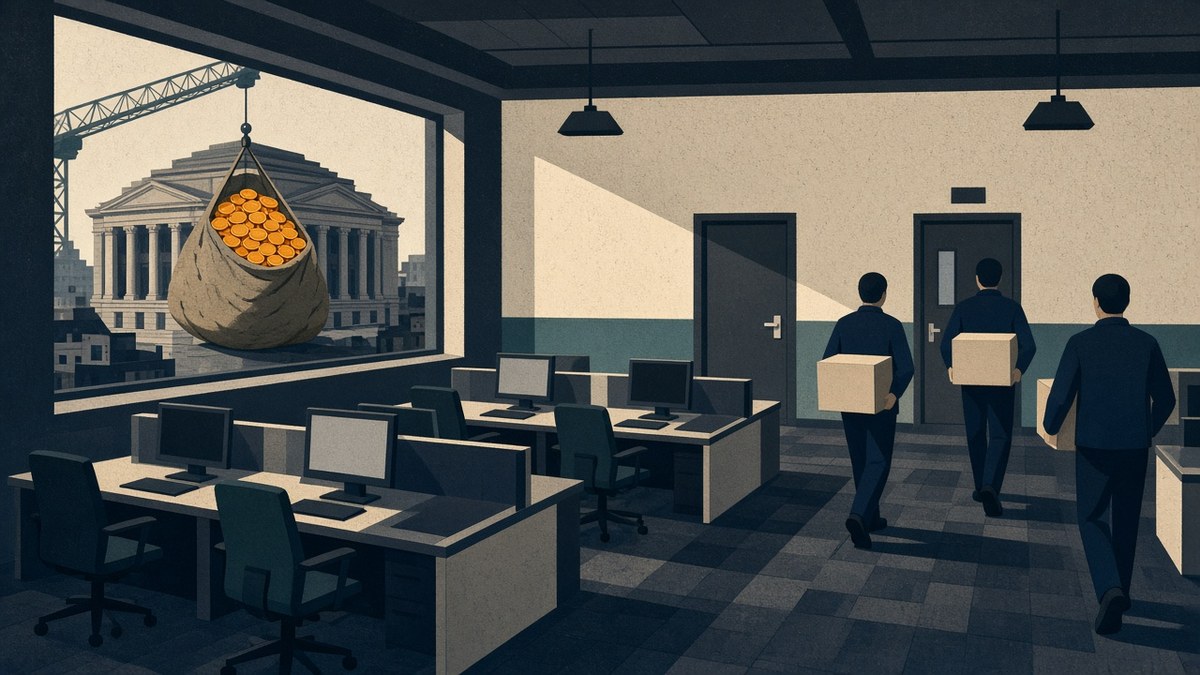
While the rest of the industry watched Grand Theft Auto VI go live, Ubisoft was handing out pink slips.
The company confirmed Thursday that it is cutting 166 jobs at its Canadian studios: 128 in Montreal and 38 in Quebec City. Ubisoft's head of public relations, Antoine Leduc-Labelle, told Radio-Canada the cuts hit production teams and some staff who support production, and amount to less than 4% of the company's Canadian workforce. The company said the cuts were made "to ensure our resources are aligned with current production priorities and business needs," and that affected workers will get severance and career-transition help. [1]
GamesIndustry.biz reported the cuts are tied to canceled or reworked projects, according to Engadget. Engadget also reported that some of the affected staff work at Vantage Studios, the Tencent-backed Ubisoft venture that runs Assassin's Creed, Far Cry and Rainbow Six, and that Ubisoft's headcount fell by about 1,100 people between April and September. On the same day, in its earnings report, Ubisoft called its Assassin's Creed Black Flag remake a "strong commercial success" and announced a new subsidiary, Motherbrain, focused on "AI for gameplay innovation." [2]
This is not Ubisoft's first Canadian retreat this year. CBC reported that the company shut its Winnipeg studio in June, putting 65 people out of work four years after saying it planned to triple its Winnipeg workforce by 2030. In January it closed its Halifax studio, cutting just over 70 jobs shortly after workers there formed Ubisoft's first union in North America. Ubisoft said that restructuring predated the union drive. [1]
Now look at who has been paying the bills.
Quebec has offered video game studios one of the richest deals anywhere: a refundable tax credit worth 37.5% of eligible salaries, paid whether or not the studio owes Quebec any tax, La Presse reported in August. The province trimmed it in 2024, so that by 2028 studios get 27.5% refundable and the last 10% only if they actually pay Quebec taxes. [3]
Ubisoft doesn't have to live under the trim. According to La Presse, side agreements signed in 2017 and 2021 guaranteed it the full 37.5% through 2030. To honor them, the government agreed this summer to give Ubisoft C$25.7 million in direct aid. In exchange, Ubisoft committed to grow its Quebec staff from 4,630 to 5,300 and invest C$64 million. La Presse reported that three studios hold such special agreements, and that the economy minister's office would not name the other two or release the terms, calling them confidential. [3]
The same paper reported that the multimedia and video game credit cost Quebec taxpayers C$459 million in 2025, and that a 2017 La Presse analysis found Ubisoft's Canadian subsidies from 2005 to 2016, €545 million, were larger than its profits over the same years, €434 million. [3]
Quebec isn't alone in the subsidy game. In Washington, a bill to create a federal tax credit of 20% to 30% on film and TV labor costs has 76 House cosponsors and 14 senators, Variety reported Thursday, and President Trump posted that lawmakers should "Get this done!" [4]
Commentary. A government that pays a company per head has bought those jobs, not created them. When the market moves, the company cuts anyway and the taxpayer is left holding the receipt. Quebec is now paying a French publisher to add 670 jobs in the same year that publisher cut 166, and the public isn't allowed to read the contract. Madison warned in Federalist No. 10 that "the most common and durable source of factions has been the various and unequal distribution of property." A secret deal between a minister and a multinational is that problem with a ribbon on it. American lawmakers lining up behind a federal Hollywood credit should study Montreal before they write the check.