
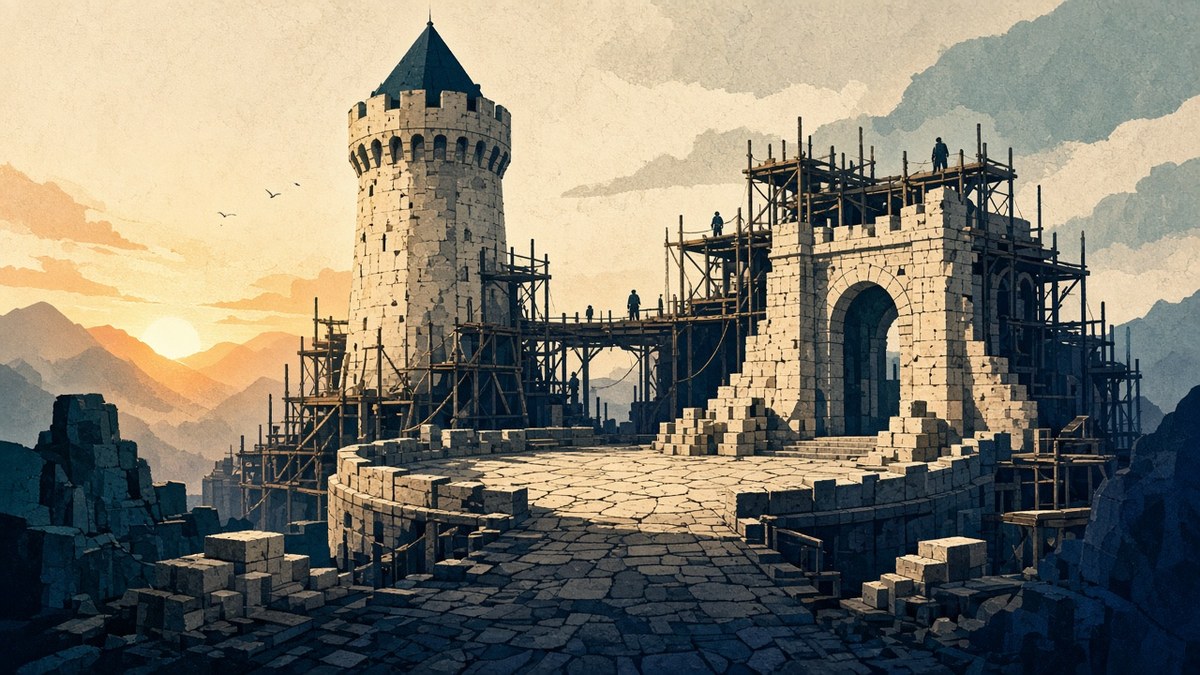
League of Legends is 17 years old, and on Saturday Riot decided to rebuild it in public.
Riot revealed League of Legends: New Dawn during the Worlds 2026 Grand Final on Nov. 14 — a massive overhaul of the flagship game scheduled for 2027, previously worked on under the codename "League Next." The confirmed scope: a modernised game client, a refreshed Summoner's Rift, updated visuals, evolved gameplay, and new ways for players to experience their champions. [1][2]
What it is not matters as much. New Dawn is not a sequel and not "LoL 2." It is the 2009 game overhauled, accounts, champions and history intact — the same bet Riot has made for 17 years, that the game players already own is worth rebuilding rather than replacing. The full reveal comes in January 2027, with release later in 2027 and no exact date yet. [2]
Hold the confirmed list separate from the trailer reading, because the trailer is all players have to argue about until January. First-look images appear to show a Dragon Pit with two entrances instead of the traditional single entry, a champion-select-style screen resembling Wild Rift's, minions with different expressions depending on whether they are attacking or walking, and what looks like a new rune called "Volt." Riot has confirmed none of those individual details. They are glimpses, not patch notes. [1]
The client is the unglamorous part that may matter most. League's client has been the game's running joke and running wound for years — the piece of software players endure between the games they love. A modernised client, the first major rebuild of it in a decade, is Riot admitting the front door of the biggest game in the world should not feel held together with tape. Executive producer Paul Bellezza called the teaser "just the beginning" and described League as "multi-generational" — a game Riot would love to see run for 100 years. [2][3]
That is the right frame for the player atmosphere, which is split exactly where you would expect: excitement that Riot is finally spending real money on the game's foundations, and anxiety that a visual refresh means the game drifting toward its mobile sibling, Wild Rift. Both reactions are social-media sampling, not a survey — but the anxiety is the tell. League players do not fear change in the abstract; they fear losing the specific game they have spent a decade learning. Riot's job between now and January is to prove New Dawn is that game with a new engine under it, not a new game wearing its name.
Seventeen years in, most live games are managing decline. League is spending its Worlds final — its biggest stage of the year — announcing a rebuild of the game itself. Whatever January shows, that is not a studio coasting.